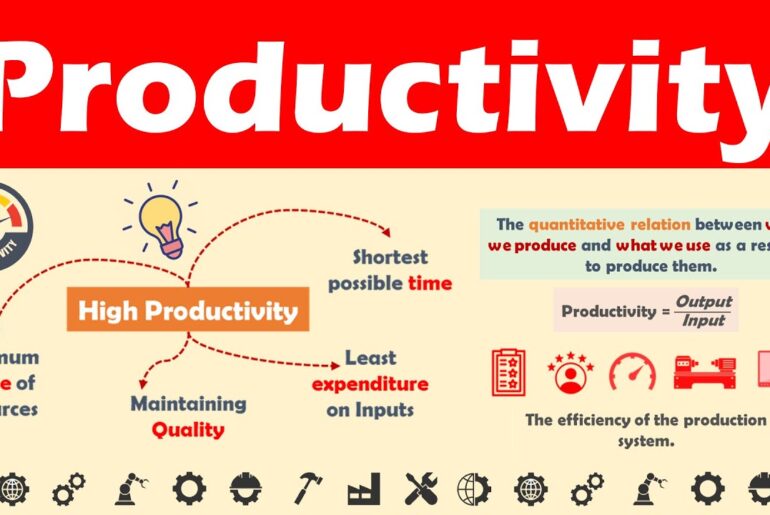
Productivity isn’t about working longer hours—it’s about working smarter. Whether you’re a business owner, remote employee, student, entrepreneur, or freelancer, improving your productivity can help you accomplish more while reducing stress and avoiding burnout.
The most productive people don’t rely on motivation alone. They build habits, use effective systems, and eliminate distractions that steal valuable time. In this guide, we’ll explore 25 proven productivity tips that actually work, helping you maximize your focus, improve efficiency, and achieve your goals faster.
Why Productivity Matters
Being productive means getting meaningful work done without wasting time or energy. Better productivity helps you:
- Complete more tasks in less time
- Reduce workplace stress
- Improve work-life balance
- Increase focus and concentration
- Achieve personal and professional goals
- Build better daily habits
- Grow your business or career faster
1. Start Your Day With a Clear Plan
Begin each morning by identifying your top priorities. Instead of reacting to emails or notifications, decide what success looks like before your workday begins.
Writing a daily to-do list keeps your mind focused and organized.
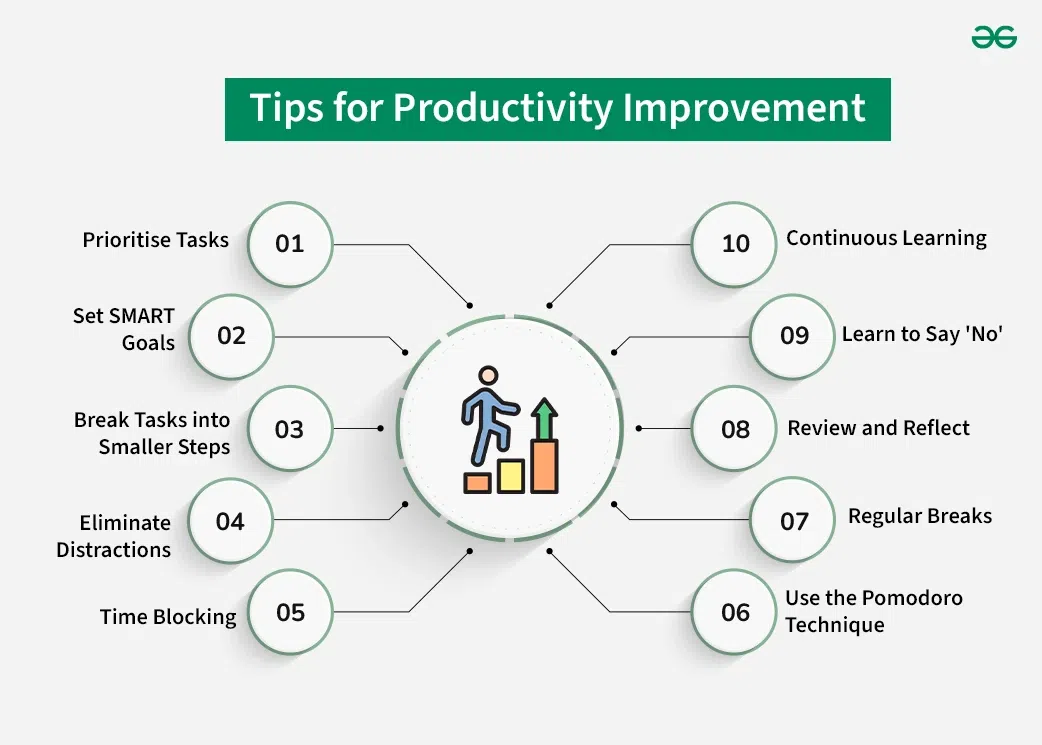
2. Prioritize High-Impact Tasks
Not every task deserves equal attention.
Use the 80/20 Rule (Pareto Principle)—focus on the 20% of tasks that generate 80% of your results.
Ask yourself:
- Which task creates the biggest impact?
- What moves my goals forward?
Complete these first.
3. Use Time Blocking
Time blocking involves scheduling dedicated periods for specific tasks.
Example:
- 8:00–10:00 AM: Deep Work
- 10:00–10:30 AM: Emails
- 11:00–1:00 PM: Client Projects
This prevents multitasking and improves concentration.
4. Follow the Pomodoro Technique
Work for:
- 25 minutes of focused work
- 5-minute break
After four sessions, take a longer 20–30 minute break.
Short work intervals improve focus and reduce mental fatigue.
5. Eliminate Distractions
Notifications, social media, and unnecessary meetings are productivity killers.
To stay focused:
- Turn off notifications
- Close unused browser tabs
- Put your phone on silent
- Use website blockers during work hours
6. Stop Multitasking
Research consistently shows multitasking reduces efficiency.
Focus on one task at a time until it’s complete before moving to the next.
Single-tasking improves quality and reduces mistakes.
7. Set SMART Goals
Your goals should be:
- Specific
- Measurable
- Achievable
- Relevant
- Time-bound
Clear goals provide direction and make progress easier to track.
8. Apply the Two-Minute Rule
If a task takes less than two minutes, complete it immediately.
Examples include:
- Replying to a simple email
- Filing a document
- Scheduling an appointment
Small tasks won’t pile up.
9. Keep Your Workspace Organized
A clean workspace reduces distractions and improves mental clarity.
Spend five minutes at the end of each day organizing your desk and digital files.
10. Learn to Say No
Every unnecessary commitment takes time away from important work.
Protect your schedule by politely declining tasks that don’t align with your priorities.
11. Take Regular Breaks
Working continuously lowers productivity.
Short breaks help:
- Refresh your brain
- Reduce fatigue
- Improve creativity
- Prevent burnout
12. Use Productivity Apps
Helpful tools include:
- Task managers
- Calendar apps
- Note-taking software
- Time trackers
- Project management platforms
Technology can automate repetitive tasks and keep projects organized.
13. Batch Similar Tasks Together
Instead of constantly switching between different activities, group similar work.
Examples:
- Respond to all emails at once
- Make phone calls back-to-back
- Schedule meetings together
This minimizes context switching.
14. Limit Meetings
Meetings often consume valuable work time.
Before scheduling one, ask:
- Can this be solved with an email?
- Is everyone necessary?
- Can it be shorter?
Efficient meetings save hours every week.
15. Create Morning Routines
Successful people often follow consistent morning habits.
Examples include:
- Exercise
- Reading
- Planning
- Meditation
- Reviewing goals
A structured morning creates momentum for the day.
16. Get Enough Sleep
Productivity starts with proper rest.
Adults should aim for 7–9 hours of quality sleep each night.
Better sleep improves:
- Memory
- Decision-making
- Focus
- Creativity
17. Automate Repetitive Tasks
Automation saves hours each week.
Automate:
- Email responses
- Invoices
- Data backups
- Appointment reminders
- Marketing campaigns
Less manual work means more time for meaningful tasks.
18. Learn Keyboard Shortcuts
Small time savings add up.
Master shortcuts for:
- Copy & paste
- Browser navigation
- File management
- Software you use daily
You’ll complete tasks much faster.
19. Stop Chasing Perfection
Perfection often delays progress.
Aim for excellence instead of perfection.
Done is often better than perfect.
20. Track Your Time
Spend one week recording how you use your time.
You may discover hours lost to:
- Social media
- Emails
- Unnecessary meetings
- Interruptions
Knowing where your time goes helps you improve it.
21. Exercise Regularly
Physical activity boosts brain function and energy.
Even a 20-minute walk can improve concentration and mood throughout the day.
22. Reduce Decision Fatigue
Simplify daily choices by creating routines.
Examples:
- Meal planning
- Preparing clothes the night before
- Using templates
- Scheduling recurring tasks
Fewer decisions leave more mental energy for important work.
23. Review Your Progress Weekly
Spend time every Friday reviewing:
- Completed tasks
- Missed goals
- Lessons learned
- Priorities for next week
Weekly reviews keep you moving in the right direction.
24. Continue Learning
Productive people continuously improve their skills.
Read books, take courses, listen to podcasts, and stay updated with industry trends.
Learning increases efficiency and confidence.
25. Protect Your Focus
Deep work produces your best results.
Create distraction-free work sessions by:
- Silencing notifications
- Wearing headphones
- Closing unnecessary apps
- Informing others you’re unavailable
Focused work often accomplishes more in two hours than distracted work does in an entire day.
Common Productivity Mistakes to Avoid
Even the best productivity systems fail when common mistakes get in the way. Avoid these habits:
- Constant multitasking
- Checking email every few minutes
- Skipping breaks
- Overloading your schedule
- Working without clear priorities
- Ignoring sleep and health
- Spending too much time in meetings
- Trying to do everything yourself
Recognizing and eliminating these productivity blockers can significantly improve your efficiency.
Final Thoughts
Productivity isn’t about being busy—it’s about making meaningful progress. By implementing these 25 proven productivity tips, you can improve focus, manage your time more effectively, and accomplish more without feeling overwhelmed.
Start by choosing just two or three strategies that fit your current routine. As they become habits, gradually add more techniques. Small, consistent improvements lead to long-term success, greater work satisfaction, and a healthier balance between your professional and personal life.
Whether you’re managing a business, growing your career, or organizing your daily life, these proven productivity habits can help you work smarter, achieve more, and make every day count.